Dog Sledding BreckenridgeAn Independent Guide See the options

Dog Sledding in Breckenridge, Colorado

A dog sledding Breckenridge trip is six miles up a snowed-in valley behind a team of huskies, about an hour and a half from your car door back to it. This guide covers what the ride is like, what it costs, when the snow supports it, and what you need on your body before you stand on the runners.

  • Six-mile valley route, about 1.5 hours
  • Season runs November to April
  • Minimum age 5, weight limit 275 lb
Quick answer Price, season, age limits and the one thing that surprises people

A dog sled tour around Breckenridge costs roughly $195 to $295 per adult, runs about six miles up a snow-covered valley, and takes an hour and a half from check-in to handshake. Tours here are run as a relay: with up to six people on a booking, everyone takes a turn driving the team, riding in the sled basket and riding the guide's passenger sleigh, so nobody spends the whole trip as a passenger. The season depends on snow rather than the calendar — roughly November to April — and the kennels sit fifteen to twenty minutes outside town up unpaved valley roads.

Key takeaways

  • Budget $195 to $295 an adult, plus a $6 to $7 permit fee where the trail crosses Forest Service land. Full cost breakdown
  • Late December and January sell out first; shoulder weeks in February and March are the easiest to book. Season and booking
  • Children can ride from age 5, and anyone under 15 needs a parent on the same tour. Going with kids
  • Snow suits and boots are usually handed out; gloves, goggles and a face cover are yours to bring. What to wear
  • Breckenridge sits at 9,600 feet, and the first day at that height is the one that ruins trips. Altitude
  • You will need a car with real winter traction to reach the kennels. Getting there

What Dog Sledding in Breckenridge Actually Is

Not a sleigh ride behind horses, and not a zoo visit. You stand on the runners of a working sled behind a team that has been running these trails all winter.

Breckenridge sits in a bowl of high valleys at the top of the Blue River, and the snow that makes it a ski town also gives it something the resorts cannot sell: quiet, groomed valley floors that hold cover from late autumn into spring. Sled teams have worked those valleys for decades, and a dog sledding tour here is the one winter activity in the area where you are steering something alive.

The shape of the day is consistent across operators in this area. You drive out of town, park at a kennel that is also somebody's home, and hear the dogs before you see them — sixty or eighty voices going at once the moment an engine cuts. A guide runs through the brake, the snow hook and four commands. Then the teams are hooked up, the noise stops the instant the sled moves, and for the next hour the loudest sound is the runners.

What surprises most first-timers is the physical part. Driving a sled is not sitting on one. You lean into the turns, you shift your weight going uphill, you pedal with one foot on the flats and you stand on the brake going down. An hour of it at 9,600 feet is a workout, which is why the relay format exists: everyone gets a turn on the runners and a turn to recover in the basket.

About six miles
The typical route length up the valley and back
1 to 1.5 hours
Door to door, including the safety briefing
Up to six people
One team, everyone rotating positions
$195 to $295
Adult price band in this area
November to April
Snow-dependent at both ends
Age 5 and up
275 lb per-person weight limit on the sled

How a Breckenridge Dog Sled Tour Is Run

The format is close to identical across operators in this area, and knowing it in advance is the difference between a good hour and a cold, confused one.

The relay: nobody rides the whole way

A booking of up to six people goes out with one team and one guide. Two people ride with the sled at a time — one driving, one in the basket — and the rest ride a small passenger sleigh towed behind the guide's snowmobile. Halfway up the valley everyone stops and swaps.

That rotation is the reason the six miles take an hour and a half. It also means the actual time you spend driving the dogs is a share of the trip, not all of it: on a full sled of six, expect somewhere around fifteen to twenty minutes on the runners. The shorter format used by some operators in Summit County runs one hour fifteen minutes total with about forty-five minutes of mushing, on a smaller booking of up to four people on one team.

If you want more time driving, the lever is group size, not tour length. A private booking for two rotates twice as fast as a full sled of six, which is what most of the price difference between a shared and a private tour actually buys.

The dogs, and what they are bred for

Teams here are Siberian huskies and Alaskan huskies — the second is not a breed registry animal but a working cross bred for pulling, with a lighter frame and a deeper engine than the Siberian. A team of eight is normal for a loaded sled on a six-mile valley run.

They are loudest before they run and silent while running. Guides will tell you the barking at the kennel is not stress but competition for a place in the team, and the behaviour matches that: the noise stops within a few metres of the start line. Dogs that are not chosen for your run keep shouting behind you until you are out of earshot.

The four commands you will be given

Instruction before the start takes about ten minutes and comes down to a short vocabulary. Hike sends the team forward, gee turns them right, haw turns them left, and whoa stops them along with the foot brake. Nobody says mush; it is not used on a working trail.

The rest of the briefing is about the brake bar, the snow hook that anchors the sled when you stop, and the one rule guides repeat hardest: never let go of the sled. A team that loses its driver will keep running, and retrieving them costs everyone the rest of the tour.

What the operator provides, and what they do not

Insulated snow suits and winter boots are usually included and handed out at check-in, and some operators stock children's sizes while others only carry adult ones — worth confirming when you book if you are bringing a small child.

What is on you: gloves or mittens, goggles or sunglasses, a neck warmer or balaclava, hand warmers, sunscreen and water. There is no gear shop at the trailhead. The gear list further down splits this into what you cannot go without and what quietly makes the hour better.

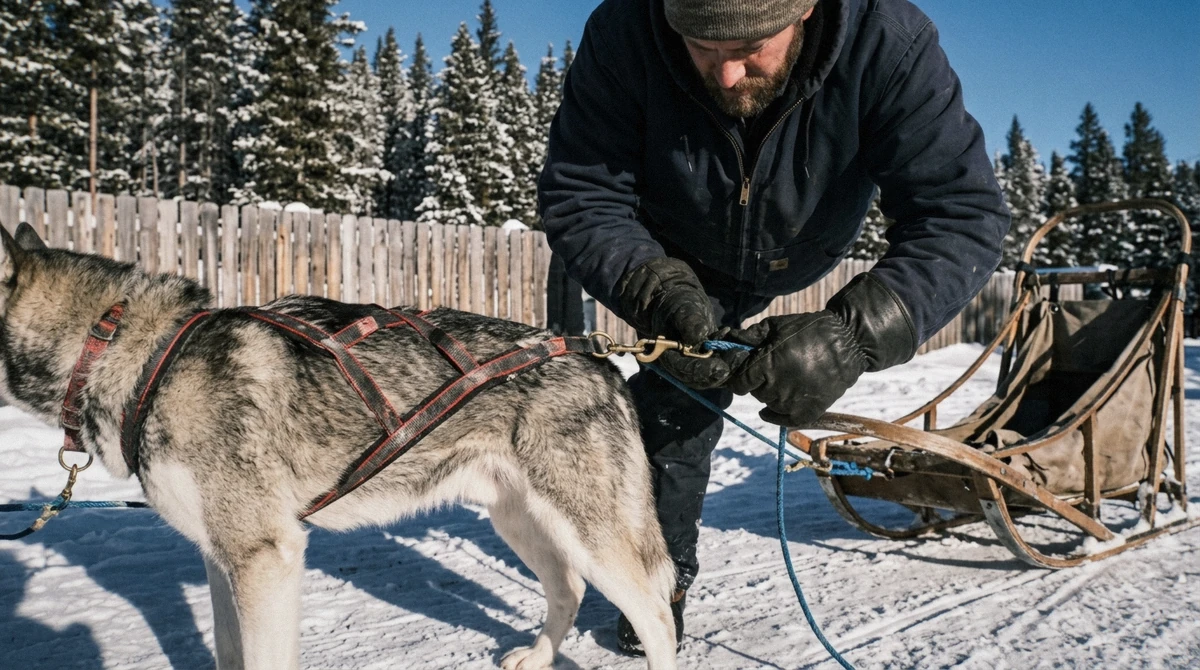
Musher clipping a husky into the tug line beside a wooden sled at a mountain kennel before a dog sledding Breckenridge tour
Hook-up is the loudest part of the morning. The noise stops within a few metres of the start line.

A Dog Sled Tour, Step by Step

Timings below are for a mid-morning departure on the standard six-mile format. Shift everything an hour later for an afternoon slot.

  1. 09:00

    Leave Breckenridge

    The kennels sit fifteen to twenty minutes out of town, and the last stretch is usually an unpaved valley road under packed snow. Allow more than the map says; this is not a road you hurry on.

  2. 09:20

    Check in, sign, and gear up

    You are asked to arrive thirty minutes before the departure time. A liability waiver is signed here, snow suits and boots are issued, and this is when the permit fee is collected if the route crosses Forest Service land.

  3. 09:45

    The briefing

    Ten minutes with the sled: brake bar, snow hook, the four commands, and how to stand. Ask now which position you start in, so you know whether to have your camera out or your hands free.

  4. 10:00

    Hook-up and start

    The team is walked out and clipped into the gangline, the noise peaks, and then goes. The first two hundred metres feel much faster than they are.

  5. 10:35

    The turnaround and the swap

    Roughly halfway up the valley the group stops, dogs get snow to eat, and everyone changes places. This is the photo stop; it is also the only chance to be off the sled without being cold.

  6. 11:10

    Back at the kennel

    The dogs are unhooked, watered and returned to the yard. Most operators let you spend time with the team afterwards, and this is where a family with young kids usually gets their best twenty minutes.

  7. 11:30

    Back in town

    You are down in Breckenridge in time for lunch on Main Street, with the whole afternoon still open.

What Dog Sledding in Breckenridge Costs

Prices in Summit County are high by national standards, and the reason is not the ride length — it is that a kennel feeds and vets more than a hundred dogs twelve months a year for a season that sells five.

The price bands, and what sits on top of them

The figures below are the published rates of operators working in and around Summit County, read from their own booking pages in Q3 2026. They are per person unless the row says otherwise, and they are the ticket only — the permit fee, gratuity and the drive out are extra.

What you bookTypical priceWhat it buysWorth knowing
Adult, shared tour$195 to $295A place on a team of up to six, everyone rotatingThe wide band is group size and sled type, not trail length
Child rate, where offeredFrom about $150Same tour, ages roughly 3 to 8Not every operator publishes a child rate; some charge full price
Private sled, up to sixAbout $1,100The whole team and guide to yourselvesCheapest per head at five or six people, and you rotate far more often
Forest Service permit fee$6 to $7 per personAccess where the route crosses public landCharged separately at check-in — it is not in the ticket price
Gratuity10 to 20 per cent, discretionaryCustomary for the guideBring cash; card tips are not always possible at a kennel

Why an hour and a half costs what a lift ticket costs

A sled team is a year-round animal operation. One kennel in this region states plainly that it keeps more than 135 dogs that need feeding, exercise and veterinary care in every month of the year, including the seven when nothing is sold on snow. Six people an hour, four or five hours a day, roughly 150 days a season, has to cover all of it.

That also explains the two things travellers most often read as greed. Payment is taken in full at booking, and cancellations inside seventy-two hours are typically non-refundable — a slot resold at two days' notice in January is not resold at all. If your plans are soft, the flexibility to look for is a date change rather than a refund, and it is worth asking about before you pay.

One honest comparison: for the price of one adult sled ticket you could buy a full-day lift ticket, or two guided half-day tours of something else. What you are paying the premium for is an hour you cannot get any other way in this valley — and most people who do it once say the money stopped mattering about thirty seconds after the team started running.

Season, and How Far Ahead to Book

The season here is set by snow depth on the valley floor, not by a date on a website, and the booking pattern follows the ski calendar rather than the weather.

When the sleds actually run

Assume roughly November through April, with both ends moving by weeks from year to year. Early season depends on whether the valley floor has taken enough cover to protect the dogs' feet and the runners; late season depends on whether the trail is still solid in the morning after warm afternoons. In a thin year, operators in this area switch to wheeled carts on dirt rather than cancel — which is a different activity, and worth confirming before you drive out.

Midwinter is not automatically the best time to go. January delivers the deepest cover and the coldest air, but March pairs a still-solid trail with roughly four more hours of daylight, softer temperatures and far more availability. If you are choosing purely for the sled ride and not for the ski conditions, March is the underrated month.

How far ahead to book

Capacity is the constraint that surprises people: one team takes six travellers per departure, so a kennel's entire day is perhaps thirty or forty seats. That sells out in a way a 300-seat gondola never does. The lead times below are what the booking pages and the peak-period warnings across this area point to.

When you are goingBook byWhy
Christmas and New Year week2 to 3 months aheadThe single tightest window of the year; operators warn about it explicitly
Mid-January to mid-February weekends4 to 6 weeks aheadPeak ski traffic in Summit County, and the same visitors want the same mornings
Spring break, March4 to 6 weeks aheadFamily weeks fill as fast as the holidays do
Midweek, January to March1 to 2 weeks aheadThe realistic last-minute option, especially for morning slots
Early November or late AprilWhen the snow report turnsBook late and stay flexible — the season edges move every year
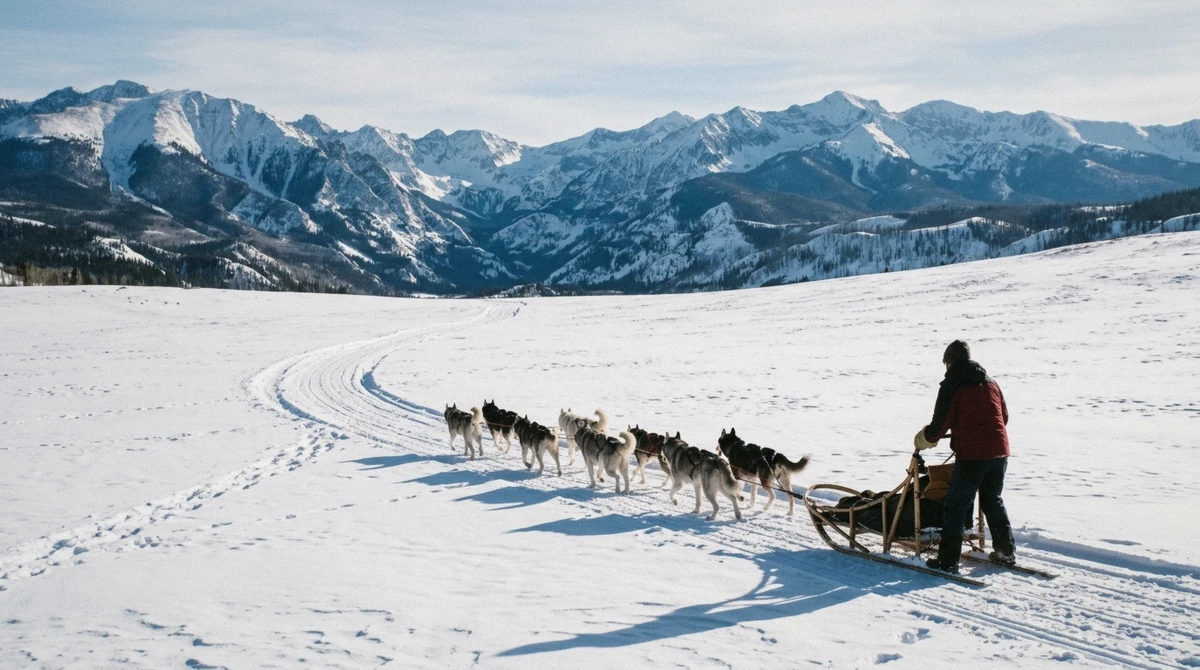
Husky team pulling a sled across an open snowfield in a Colorado mountain valley in late afternoon light on a dog sledding Breckenridge trip
March: the trail still solid, and roughly four more hours of daylight than January.

Breckenridge Sledding Season, Month by Month

Monthly mean temperatures for the Breckenridge grid cell from the [ERA5 reanalysis](https://cds.climate.copernicus.eu/), averaged over 2015 to 2024, with the average monthly snowfall over the same decade. The snow column matters more than the temperature one: this is a trail-condition activity.

Snowfall averages about 35 cm in January, 42 cm in March and 46 cm in April — April is the snowiest month of the year here, but it falls on ground that is thawing between storms, which is why the sled season ends before the snow does.

Getting to the Trailhead from Denver

Breckenridge is about 80 miles from Denver, and in winter the drive is the part of the trip most likely to go wrong.

The drive, and the two hours it actually takes

West on I-70 out of Denver, up through Clear Creek Canyon, over the Continental Divide and down to the Frisco exit, then south on Highway 9 to Breckenridge. In clear conditions it is an hour and forty-five minutes to two hours. In a Friday storm it can be four, and the Interstate closes outright several times each winter.

The high point is the Eisenhower Tunnel at 11,158 feet — the highest point on the entire Interstate system. Coming from sea level, you gain all of that altitude in about ninety minutes of sitting still, which is the single biggest reason people feel wrecked on their first evening in town.

From Breckenridge itself, the kennels are another fifteen to twenty minutes out, usually up a valley road that is plowed but not bare. Leave earlier than you think, and remember that arriving thirty minutes before the departure time is a requirement, not a suggestion.

Colorado's Traction Law is not advice

Colorado can put the Passenger Vehicle Traction Law in force on any state highway during a storm, and on the I-70 mountain corridor it happens repeatedly through the winter. Under it your vehicle must have all-wheel or four-wheel drive with mud-and-snow, winter or all-weather rated tires and at least 3/16 inch of tread — or chains.

The fine for driving in without that is $100 plus a $33 surcharge, and if you spin out and block a lane it becomes $500 plus a $157 surcharge. State troopers do enforce it. This is the specific reason a summer-priced two-wheel-drive rental is a false economy on a January trip to Summit County.

Check conditions before you leave on COtrip, Colorado's own traffic site, rather than a mapping app: closures and traction restrictions post there first.

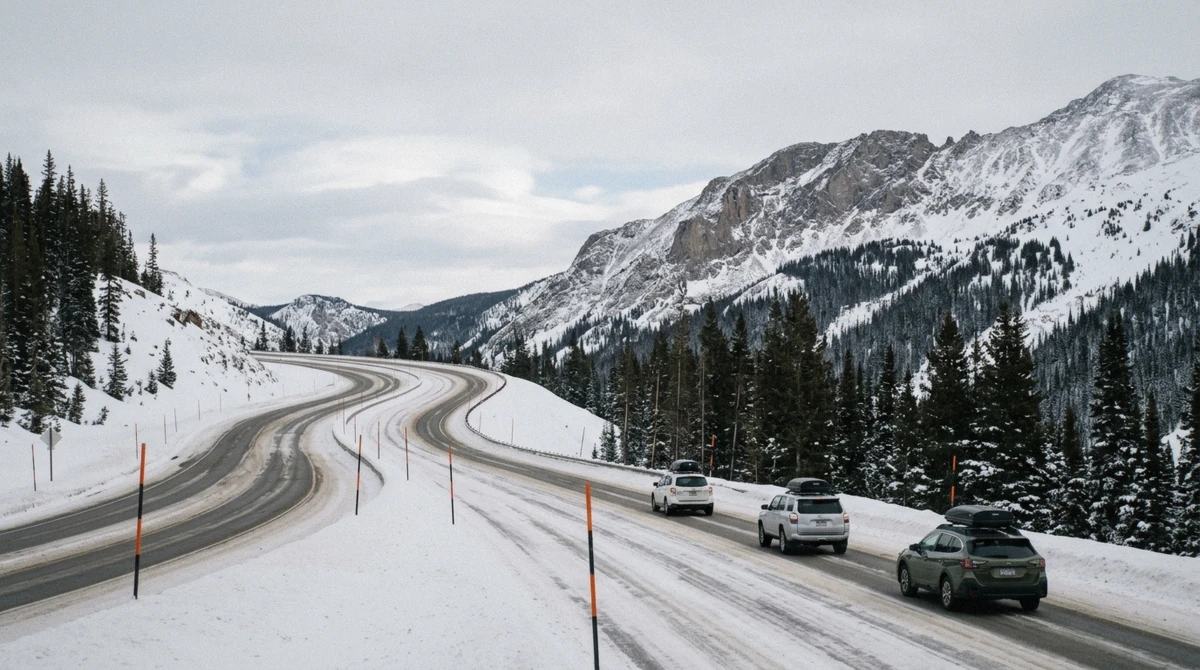
Interstate 70 climbing a snowy Colorado mountain pass in winter on the drive from Denver to a dog sledding Breckenridge tour
I-70 over the Divide. Traction restrictions go up on this stretch several times a winter.

Renting a Car for a Colorado Winter Trip

Unless you are staying in the town centre and only doing town things, a dog sled morning needs a car — the kennels are not on a bus route.

What to book, and what to check at the counter

Book all-wheel or four-wheel drive, and confirm it in writing rather than trusting the SUV category — plenty of vehicles listed as SUVs at Denver airport are front-wheel drive crossovers, which do not satisfy the Traction Law on their own.

At the counter, do three things. Look at the tires: the law asks for mud-and-snow, winter or all-weather rating and 3/16 inch of tread, and rental fleets in Denver are not uniformly compliant. Ask whether chains are permitted under the rental agreement, because many companies forbid them, which quietly makes their two-wheel-drive cars illegal on a chain-law day. And check the ski-rack or roof-box policy if you are combining the trip with ski days.

Pick the car up at Denver airport rather than in Breckenridge: rental supply in the mountain towns is thin and expensive in season. Allow extra time on the return leg, because I-70 eastbound on a Sunday afternoon in ski season is its own kind of traffic.

Getting Here Without a Car

If you are not driving, no scheduled service reaches the kennels — but the day tours below at least put you in the valley the sled trails run through, and both cancel free up to 24 hours before.

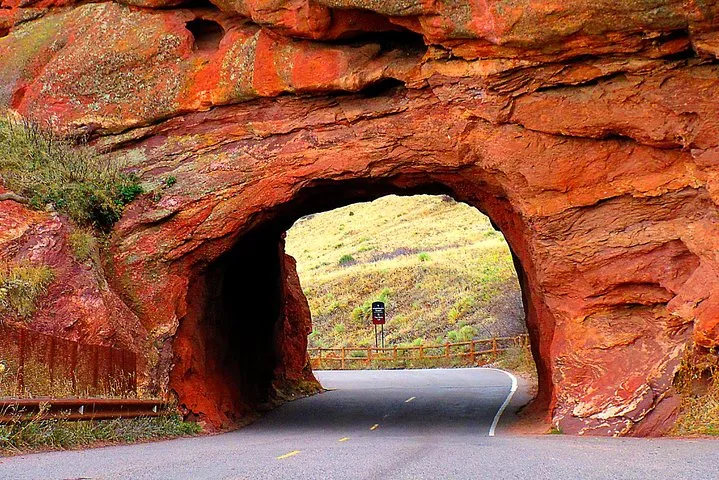
Van tour viewpoint over the Tenmile Range on a full-day Rocky Mountains trip from Denver to Breckenridge, Colorado from $138 No car needed

From Denver: Breckenridge and Rocky Mountains Guided Tour

★★★★★ ★★★★★ 4.7(93 reviews)· 8 hours

Listing details checked in Q3 2026

Built for travellers with no car and no snow-driving nerve: a 12-seat van leaves Union Station at 08:15, stops at Red Rocks and Clear Creek Canyon, crosses Loveland Pass and Sapphire Point, then parks you in Breckenridge for two free hours before heading back. It will not get you to a kennel, but it is the cheapest way to see the valley the sled trails run through. Free cancellation up to 24 hours before, and you can reserve now and pay later.

  • Departs Denver Union Station at 08:15
  • Loveland Pass and Sapphire Point photo stops
  • Two free hours in Breckenridge
  • Limited to 12 travellers
Check Availability
Snow-covered Continental Divide viewpoint on a day trip from Denver to Breckenridge, Colorado in winter from $149.98 Most reviewed

Red Rocks Park, Continental Divide and Breckenridge Day Trip

★★★★★ ★★★★★ 4.9(795 reviews)· 8 hours

Listing details checked in Q3 2026

Nearly 800 reviews and a 4.9 average make this the safest bet among the Denver day trips that reach Breckenridge. Same shape as the tour above — Red Rocks, the climb over the Divide, free time on Main Street — with admission and bottled water included. Worth knowing before you book: no children under seven, and the operator states it is not recommended for travellers with spinal injuries or poor cardiovascular health, which is an altitude caution as much as a road one.

  • 4.9 average from nearly 800 verified reviews
  • Red Rocks Park admission included
  • Crosses the Continental Divide above 3,600 m
  • Free cancellation up to 24 hours before
Check Availability

Where to Stay in Breckenridge

Sled tours start early and the kennels are north and east of town, so the practical question is not which lift you are near — it is whether you can get a car out of the garage at eight in the morning without a fight.

Six places that suit a sledding trip, by what you actually need

Guest scores and nightly rates below are Google's aggregated hotel data for a two-night mid-January stay for two adults, read in Q3 2026. Rates in Breckenridge swing hard by date — the same room is half the price in a midweek February window as it is over New Year — so treat the column as a ranking, not a quote.

WhereBest forGuest scoreFrom, mid-January
One Ski Hill PlaceSki-in, ski-out at Peak 8 with two pools and a bowling alley for a storm day4.5 / 5$593 a night
Grand Colorado on Peak 8The same lift access with a bigger spa and pool complex4.6 / 5$569 a night
The Village at BreckenridgeWalking distance to both Main Street and the Peak 9 lift4.2 / 5$291 a night
Grand Timber LodgeFamilies wanting a kitchen and ski-in access without resort pricing4.6 / 5$319 a night
Residence Inn BreckenridgeSuites with full kitchens, a short walk south of Main Street4.4 / 5$303 a night
Fireside InnThe cheapest bed in town centre, with a hot tub and a dorm option4.8 / 5$221 a night

How to choose between them for a sled morning

If the sled tour is the reason for the trip, stay in or near the town centre rather than up at Peak 8. The kennels are reached by driving north or east out of Breckenridge, and starting that drive from a valley-floor hotel on Highway 9 is simpler than dropping down Ski Hill Road in the dark first.

If you are skiing as well and the sledding is the day off, the lift-side properties earn their premium — you will use them for five days and drive once.

For families, the kitchen matters more than the location. Sled mornings start early and finish hungry, and Main Street breakfast queues in January are long. The two suite properties above are the pragmatic choice, and both come in well under the ski-in options.

All six can also be compared side by side on Expedia's Breckenridge listings if your dates fall outside the mid-January window above.

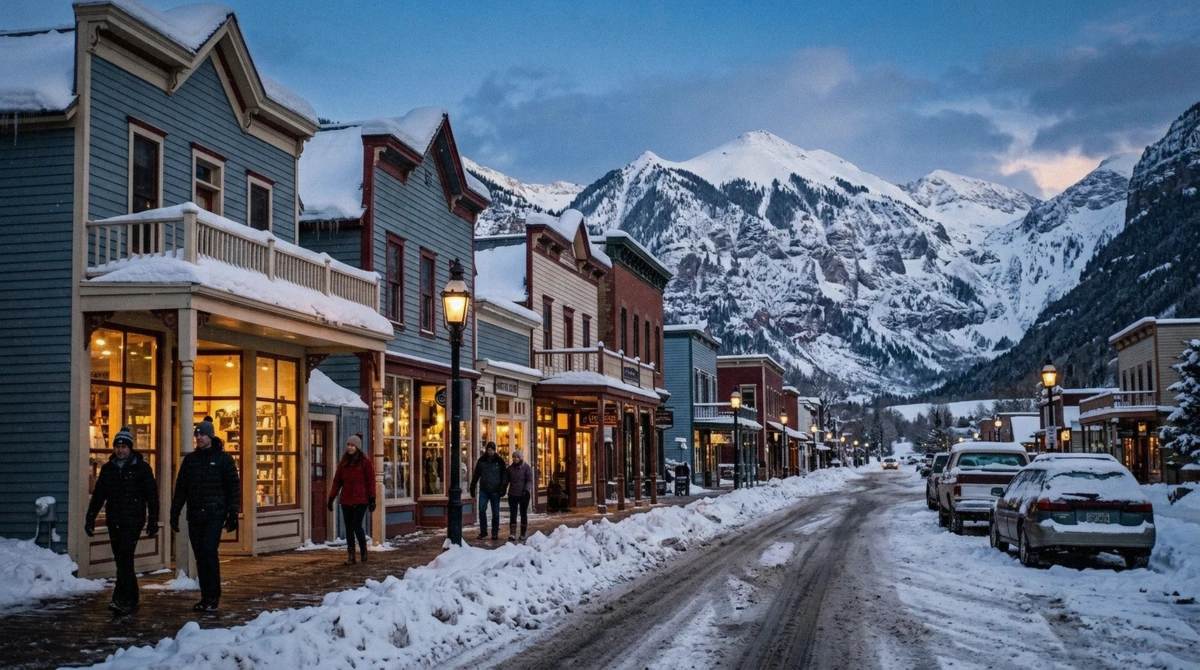
Snow-lined Victorian main street in Breckenridge, Colorado at dusk, the town base for a dog sledding Breckenridge trip
Staying on the valley floor makes the early drive out to the kennels simpler than dropping down from Peak 8.

What to Wear on a Dog Sled Tour

Dress for standing still in an open sled at 9,600 feet in a headwind of your own making — colder than the same day on a ski lift, because you are not generating heat between runs. The product links below go to Amazon and pay us a commission at no extra cost to you.

Non-negotiable

You will normally be handed an insulated snow suit and winter boots at check-in, so the base layers and the extremities are what you have to get right yourself. Everything in this list either keeps a body part from hurting or keeps the tour from ending early.

ItemWhat we link toWhy it matters on a sled
Merino or synthetic base layer, top and bottom100% merino base layer set, men · womenCotton holds the sweat from the gear-up and then freezes on you for the next hour
Insulated waterproof trousersArctix Essential insulated bib overallsSnow spray off the runners hits your legs constantly, even on a dry day. Bibs beat trousers because nothing gapes at the back when you lean
Waterproof mittens, not glovesTough Outdoors insulated ski mittensFingers share heat in a mitten; you still need grip on the handlebar, so ski mittens beat both liners and bulky gauntlets
Balaclava or neck gaiterTough Headwear fleece balaclava hoodWind chill at speed goes straight for the cheeks and the gap under the goggles
Goggles or wraparound sunglassesOutdoorMaster OTG ski gogglesSnow spray plus 9,600-foot glare. The OTG cut fits over prescription glasses, which is the version most people actually need
Wool socks, one pairAlvada merino wool crew socks, 3 pairsTwo pairs jammed into a loaner boot cuts circulation and makes feet colder, not warmer
Insulated winter bootsNORTIV 8 waterproof insulated winter bootsIncluded by most operators, but bring your own if you have narrow or very large feet
High-SPF sunscreen and lip balmCeraVe mineral SPF 50 face stick · SPF 50 lip balmAt altitude on fresh snow you burn from above and below, and the lips go first

Worth having

None of these will end your tour if you skip them, but every one is something people come back and say they wished they had brought.

ItemWhat we link toWhat it changes
Chemical hand and toe warmersHotHands hand warmers, 40 pairs · toe warmersThe cheapest upgrade to the hour. Start them in the car, not at the trailhead — they need fifteen minutes of air to reach full heat
Ski helmetOutdoorMaster Kelvin ski helmetPermitted by operators in this area, and worth it if you are nervous about driving
Action camera chest mountchest harness for GoPro-style camerasYou cannot hold a phone and the sled at the same time — and you must hold the sled
Thin liner glovesUnigear touchscreen glove linersFor the two minutes at the turnaround when the mittens come off for photos
A dry set of clothes in the carWhatever you already ownSnow finds its way in; the drive back is nicer without it
Cash for the guideCard tipping is not always possible at a kennel
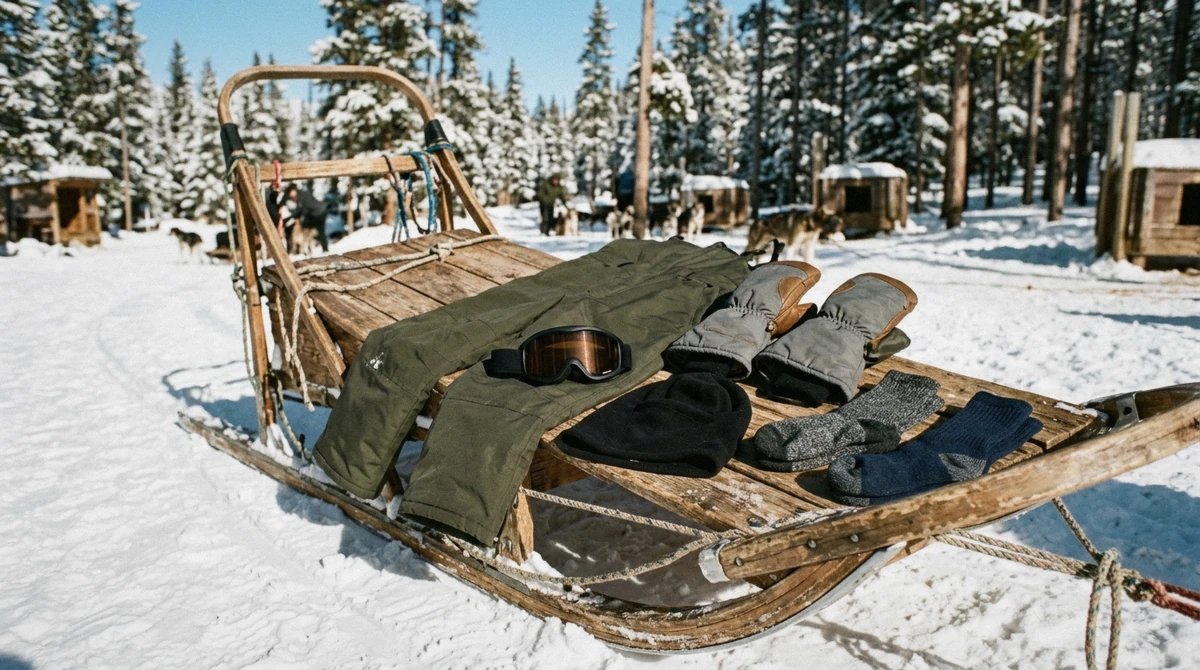
Insulated bibs, waterproof mittens, goggles and wool socks laid out on a dog sled before a dog sledding Breckenridge tour
Snow suit and boots are usually handed to you. Everything in this photo that touches your hands, eyes or face is yours to bring.

Dog Sledding with Kids

This is one of the more genuinely family-friendly winter activities in Summit County, with three hard limits that catch people out.

The age and weight rules

The minimum age for a sled tour in this area is 5, and children of 4 and under are not carried at all. Anyone under 15 must have a parent or guardian on the same tour, not waiting in the warming hut. There is a strict weight limit of 275 pounds per person, and it exists for the dogs rather than the sled: eight animals pull the total load of the sled, the driver and the passenger up a valley.

Pregnant travellers are not carried on sled tours here. That is standard across the region and is not usually negotiable at the trailhead, so plan around it rather than turn up hoping.

One practical detail worth asking about at booking: loaner snow suits and boots do not always come in children's sizes. Some operators stock them, some carry adult sizes only. If your child has their own ski kit, bring it regardless.

What the hour looks like from a child's side

Small children ride in the basket of the sled, wrapped and low out of the wind, or on the towed passenger sleigh with an adult. Driving requires enough weight and reach to work the brake, so realistically that starts around the early teens — under that, a child rides and a parent drives.

The part that actually lands with kids is not the ride. It is the twenty minutes at the kennel afterwards, when the dogs come off the line and can be met, touched and asked about by name. If you are travelling with a five- or six-year-old, book a morning slot, plan nothing for the afternoon, and treat the kennel time as the main event rather than the epilogue.

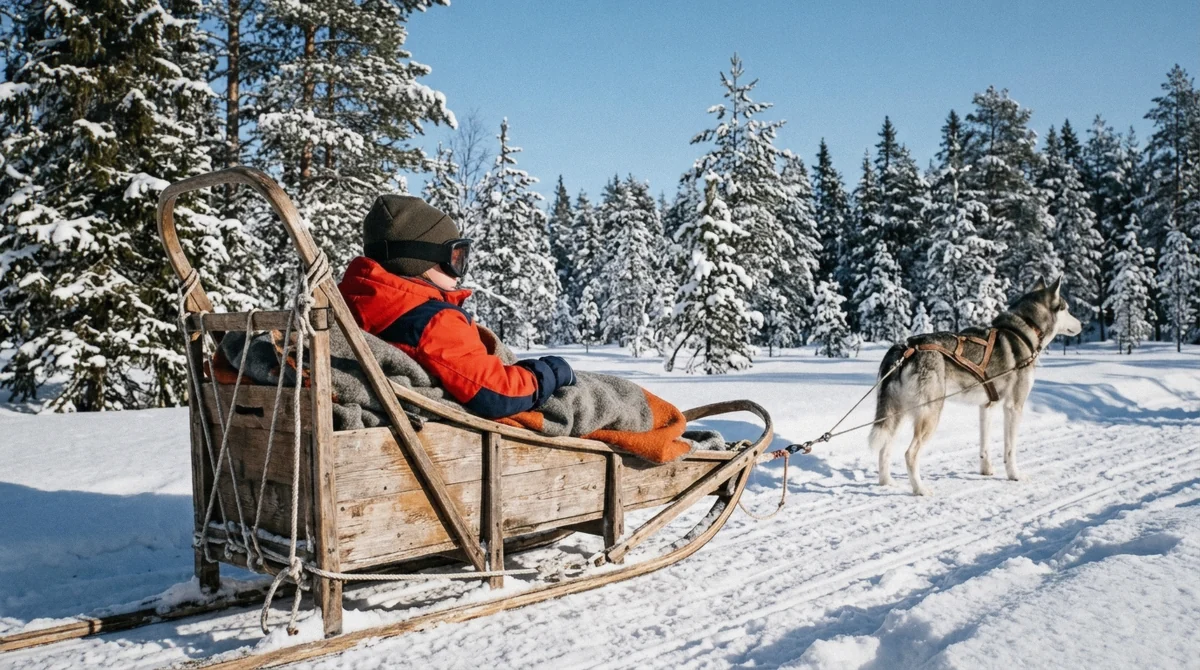
Child in a snowsuit and goggles wrapped in the basket of a dog sled before a dog sledding Breckenridge tour
Under the early teens, a child rides in the basket and an adult drives.

Altitude: The Part Most Visitors Underestimate

Breckenridge sits at about 9,600 feet. That is high enough that a lot of first days here are quietly written off, and a sled morning is a bad thing to schedule into one.

What happens, and how to plan around it

Coming from Denver you climb from 5,280 feet to 9,600 in under two hours, crossing 11,158 feet at the Eisenhower Tunnel on the way. Headache, broken sleep, breathlessness on stairs and a flat, nauseated feeling on the first evening are all common, and they have nothing to do with fitness.

The practical planning rules are simple. Do not book the sled tour for the morning after you fly in if you can avoid it — day two or three is far more enjoyable. Drink more water than feels reasonable, starting on the drive up. Go easy on alcohol for the first evening, because at this elevation it hits differently. And if someone in your group is short of breath at rest, confused or vomiting, the treatment is to drive down, not to rest at altitude — losing 3,000 feet on Highway 9 fixes most of it.

Standing on a sled is not aerobically hard at sea level. At 9,600 feet, pedalling with one foot to help the team up a rise will have you breathing harder than you expect, which is another quiet argument for the rotating format.

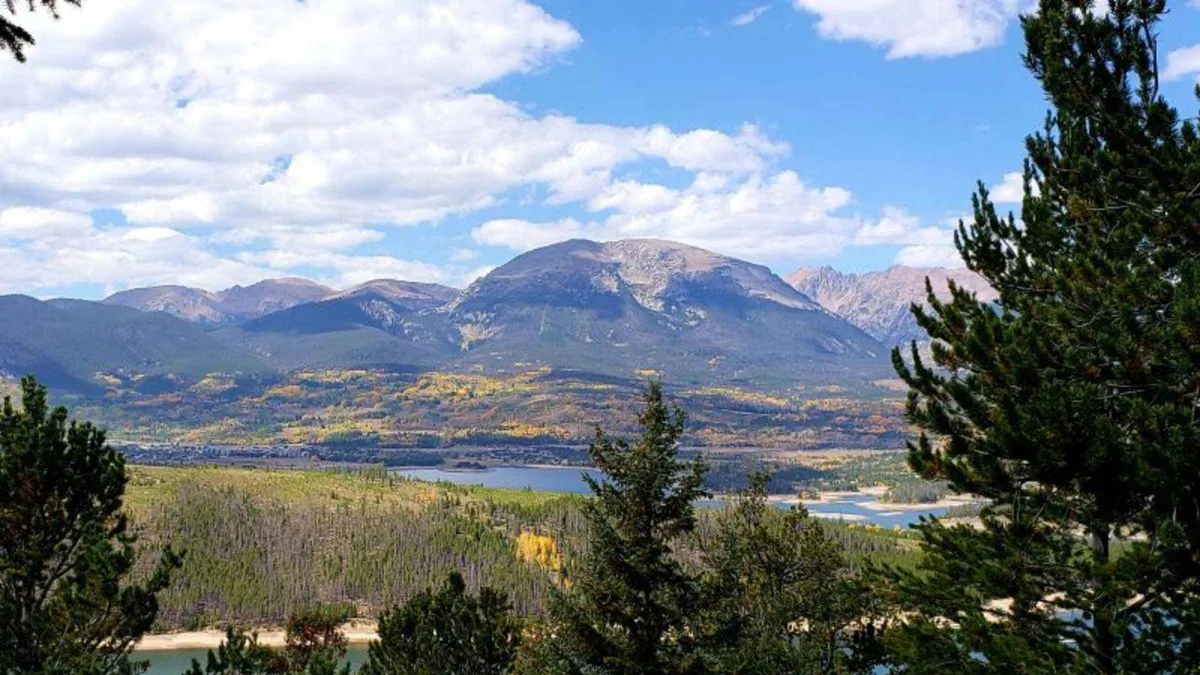
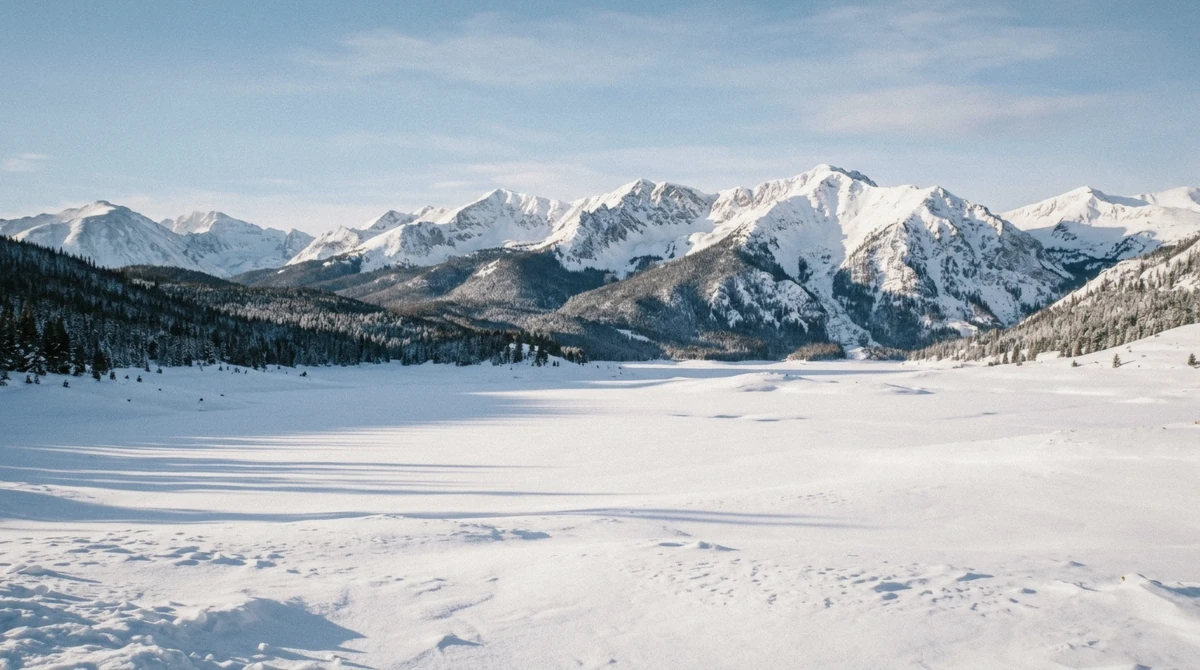
The snow-covered Tenmile Range above a white valley floor near Breckenridge, Colorado in early morning winter light
The valley floor here is already at 9,600 feet. The ridgeline behind it runs past 13,000.

How the Dogs Live, and What to Look For

Every sled operation invites the same question, and the honest answer is that the standard varies. Here is what to look at rather than what to assume.

Signs of a well-run kennel

Watch the dogs before your tour, not during it. A working team greets a visitor loudly and physically, tails high, pulling toward people rather than away. Dogs that are quiet, hunched or uninterested in a new arrival are the ones to notice.

Good questions to ask before you book, and none of them is rude: how many dogs are in the kennel and how many run in a day; what happens to a dog when it retires; whether the team is rotated or the same animals run every departure; and what the temperature limits are, because responsible operators cancel in extreme cold and in warm spring conditions that overheat a running team.

An operation that keeps a hundred-plus dogs year-round is carrying a serious cost in the seven months nothing is sold — which is worth remembering when a ticket price looks steep. If you want to see where that goes, ask about the retirement and adoption programme; kennels in this region rehome older dogs, and the ones that do will talk about it happily.

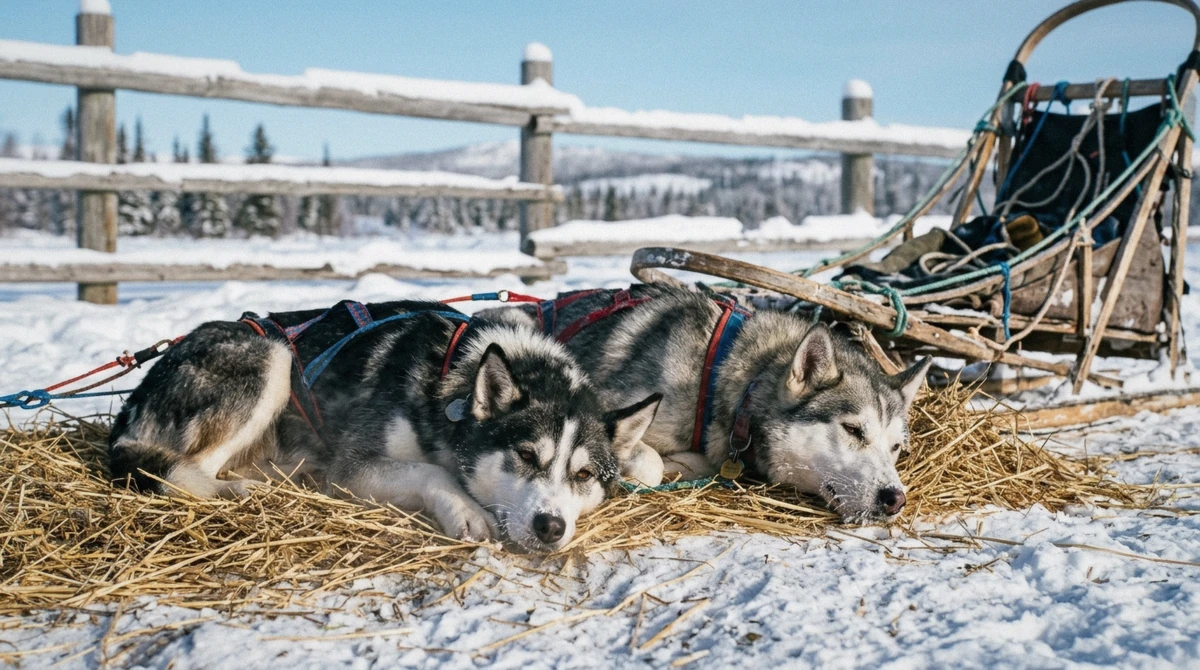
Two Alaskan huskies in harness resting in the snow beside a sled after a run near Breckenridge, Colorado
Watch the team before your run, not during it: a working dog greets a stranger loudly and pulls toward them.

Dog Sledding in Breckenridge in Summer

Yes, it runs — but not on snow, and it is a different day out.

Carts on dirt, and kennel visits

Through summer and autumn the teams here keep training on wheeled carts on dirt roads, and operators in this area sell that as a tour. You get the same dogs, the same noise at the start line and a much better look at how a kennel works, at a lower speed and a much lower temperature tolerance — summer runs go early in the morning and get cancelled outright when it is warm.

What you do not get is the thing the photographs sold you: silence, snow, and a valley with nothing in it. If dog sledding is the reason you are choosing dates, choose winter. If you are here in July with children who love dogs, the cart ride and the kennel tour is a genuinely good morning, and it is usually the cheaper ticket.

A thin-snow week in November or April can also mean carts instead of sleds — always confirm which one you are booking when the season is turning.

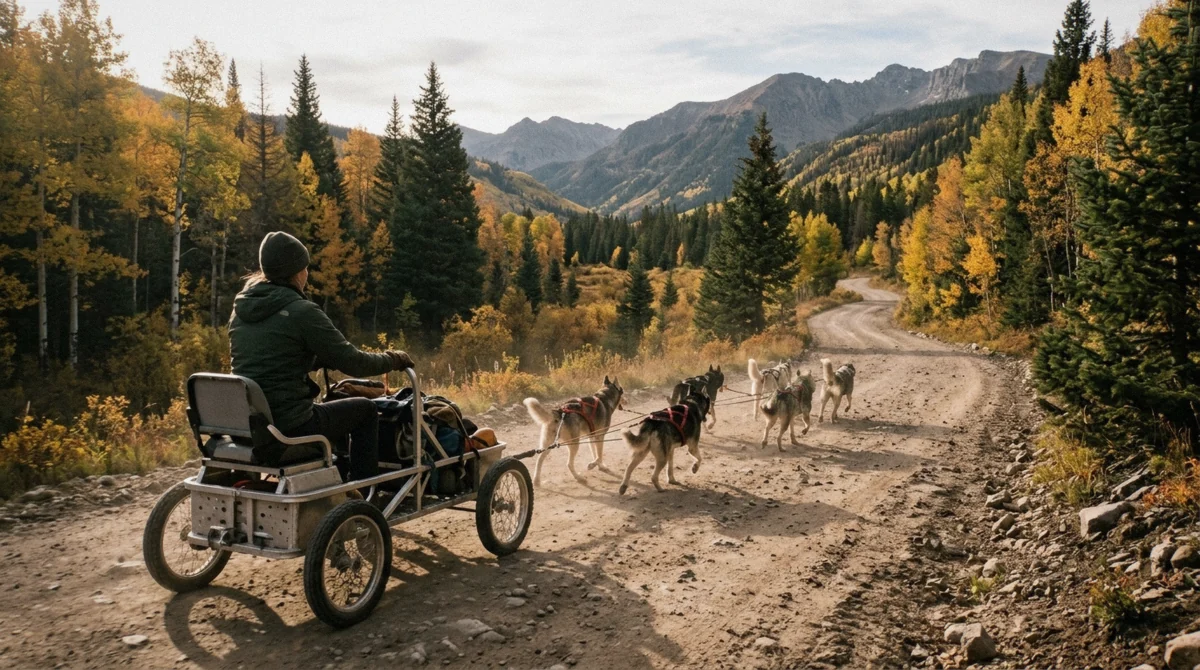
Husky team pulling a wheeled training cart along a dirt forest road in autumn, the summer version of dog sledding in Breckenridge
Summer and autumn: the same dogs, a wheeled cart, dirt instead of snow.

Other Things to Do in Breckenridge in Winter

A sled tour eats a morning and leaves the rest of the day open. These are the Breckenridge-area activities that can be booked online in advance, all with free cancellation up to 24 hours before.

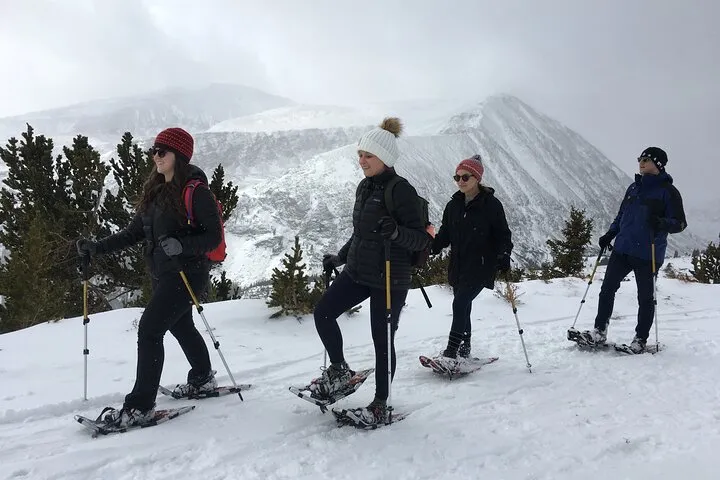
Guided snowshoe trail through deep powder in the forest outside Breckenridge, Colorado, a winter alternative to dog sledding in Breckenridge from $99 Closest to a sled day

Half-Day Guided Snowshoe Tour Near Breckenridge

★★★★★ ★★★★★ 5.0(8 reviews)· 3 hours 30 minutes

Listing details checked in Q3 2026

The nearest thing to a sled day you can actually book online here: three and a half hours on backcountry routes outside Breckenridge, with snowshoes and poles handed to you at the meeting point. Groups cap at six, the pace is set by whoever is slowest, and the guide picks the trail off that morning's avalanche and wind report rather than a fixed itinerary. Free cancellation up to 24 hours before.

  • Snowshoes and poles included
  • Maximum six travellers on a departure
  • Route chosen on the day from current snow conditions
  • Free cancellation up to 24 hours before
Check Availability
Historic Main Street buildings in downtown Breckenridge, Colorado lit at night on an evening walking tour from $35 Cheapest evening out

Breckenridge Ghostly Tales Walking Tour

★★★★★ ★★★★★ 4.7(238 reviews)· 1 hour 40 minutes

Listing details checked in Q3 2026

Sled tours finish in the early afternoon, which leaves the evening open. This one walks the mining-era blocks of downtown after dark, ghost-hunting gear handed out at the start, meeting at the dredge boat. It runs entirely outdoors, so it is a second night in ski clothes rather than an excuse to change — and at $35 it is the cheapest thing on this page. Wheelchair accessible, prams welcome, an adult must book.

  • Runs entirely outdoors through downtown Breckenridge
  • Ghost-hunting equipment provided
  • Wheelchair accessible route
  • Free cancellation up to 24 hours before
Check Availability

The Things You Can Only Book Direct

Two of the best winter activities in this valley are not sold through any booking platform, so plan them the same way you plan the sled tour: early, and by phone or the operator's own site.

Snowmobiling and sleigh rides

Snowmobile tours run from the same valleys as the sled teams and are the other half of most operators' winter business — guided rides of one to two hours on groomed backcountry trails, usually with machines and suits included, and usually sold in the same morning and afternoon blocks that fill first.

Horse-drawn sleigh rides are the gentler alternative and the one that works with small children, elderly relatives or anyone the sled weight limit rules out. They are typically a shorter ride across open meadow, often with a meal at the end, and they run in the evening as well as by day.

Neither shows up on the booking platforms this site links to, so there is nothing here to click. Both fill for the same holiday weeks the sled tours do, so treat them as things to arrange before you fly, not from your hotel room.

Dog Sledding in Breckenridge: Common Questions

Is there dog sledding in Breckenridge?

Yes. Teams run from kennels in the valleys around the town through the winter, typically on a six-mile route taking about an hour and a half door to door. The trailheads sit fifteen to twenty minutes outside the town centre, so you need a vehicle to reach them — see getting there. Outside the snow season the same teams run wheeled carts on dirt.

What is the price range for dog sledding in Breckenridge?

Roughly $195 to $295 per adult for a shared tour, with child rates from about $150 where they are offered, and around $1,100 for a private sled for up to six. Where the route crosses Forest Service land there is also a $6 to $7 per-person permit fee collected separately at check-in. The full cost breakdown explains what drives the spread and why the flat rate is high for ninety minutes.

Is dog sledding worth the money?

For most people who do it once, yes — but not as a scenic ride. The value is in driving a working team yourself rather than being driven, which is why the relay format matters: on a full sled of six you get roughly fifteen to twenty minutes on the runners. If you would rather sit and look at scenery for less money, a sleigh ride or a half-day snowshoe tour delivers that better. If the idea of standing on the runners is what brought you here, nothing else in the valley substitutes for it.

What should I wear for dog sledding in Breckenridge?

Ski clothing, plus the four things operators do not lend: waterproof mittens, goggles or wraparound sunglasses, a balaclava or neck gaiter, and hand warmers. Snow suits and winter boots are usually issued at check-in. The full gear list splits it into non-negotiable and worth-having, and explains why one pair of wool socks beats two.

How far in advance should I book a dog sled tour?

Two to three months for Christmas and New Year week, four to six weeks for January and February weekends and for March spring break, and one to two weeks midweek in the depths of the season. A single team carries six people per departure, so a kennel's whole day is a few dozen seats — the booking table lays the lead times out.

Do children need to be a certain age to go dog sledding?

Minimum age is 5 in this area, with under-4s not carried at all, and anyone under 15 needs a parent or guardian on the same tour. There is also a 275-pound-per-person weight limit for the dogs' sake, and pregnant travellers are not carried. Loaner snow suits are not always available in children's sizes — more on going with kids.

Do I need a 4WD car to get to the trailhead?

In practice yes. The kennels are up valley roads that are plowed but rarely bare, and Colorado's Traction Law can require all-wheel or four-wheel drive with rated tires and 3/16 inch of tread on the I-70 corridor during any storm, with a $100 fine plus surcharge for ignoring it. What to book and check at the rental counter.

When does the dog sledding season start and end in Breckenridge?

Roughly November to April, moving by weeks each year with the snow. Late December and January are the busiest and coldest; February and March combine a solid trail with longer days and more availability, which makes them the easier months to book. The month-by-month chart has the temperature and snowfall averages behind that.

Sled mornings are the first thing to sell out in a Breckenridge winter, and the room you sleep in beforehand decides how early you have to leave.

Christmas and New Year weeks book two to three months ahead

Rates and guest scores on this page were read from live listings and are re-checked every quarter.

Compare Breckenridge Stays
Tours from $35 See the options